
connect to your core: lengthen
You’ve mastered the breath and isolated your pelvic movement. Now, let's bridge the gap (ha) between stability and functional strength along your spine.
Week Three:
During pregnancy, we tend to arch the back with an anterior tilt as we grow our babies. While we recover postpartum, the hamstrings and lower back still tend to take over the workload of the glutes. This gluteal amnesia contributes to poor postural mechanics when walking, lifting your baby, or standing. This makes regaining your strenth and engaging your core so much harder. By combining a posterior pelvic tilt with a glute bridge, we force your glutes to initiate the lift while keeping the rectus abdominis and TA engaged, preventing the lower back from hyperextending at the top.
Your physical therapist will likely give you both of these exercises, but we can combine them together. This helps elongate your spine and engage your abdominals.
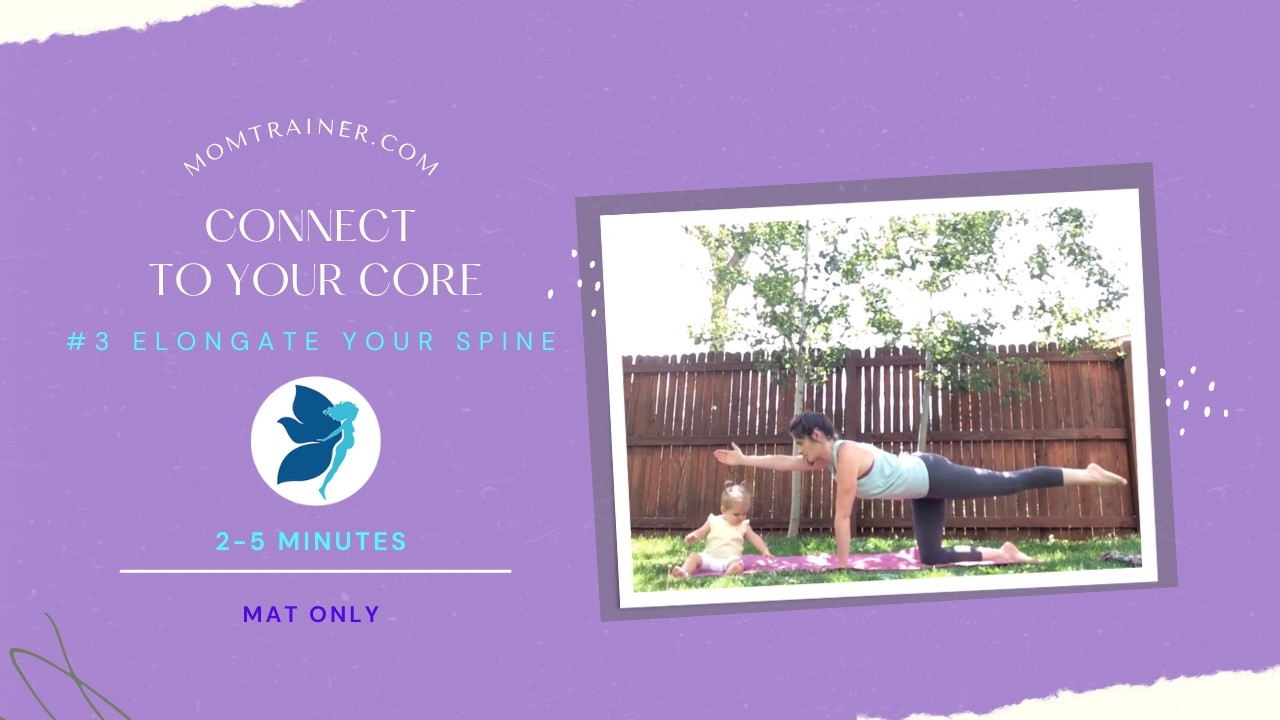
Click to watch:
The Move: Lie on your back, knees bent, feet flat on the floor hip-width apart. Begin by performing a posterior pelvic tilt (tucking your tailbone). Maintaining that abdominal engagement, drive through your heels to lift your hips toward the ceiling until your body forms a straight line from your shoulders to your knees. Squeeze your glutes at the top, then lower down each vertebrae at a time.
The Deep Alignment Dive: According to a study in the Journal of Electromyography and Kinesiology (PubMed), utilizing a pelvic tilt prior to performing a bridge significantly increases the electromyographic (EMG) activity of the gluteus maximus while minimizing lumbar erector spinae strain. This is critical for rebuilding posterior chain strength without exacerbating lumbar lordosis.
Want more like this? Subscribe to MomTrainer.com or sign up for the 15 minute Postpartum program. It's completely free and gentle for postpartum Cesarean and diastasis recti recovery.




Comments